Basement Waterproofing NJ Solutions for Cracks in Foundation Walls
Cracks in foundation walls tend to get dismissed until the first heavy rain puts water on the basement floor. By then, the problem feels sudden, but the underlying issue usually has been building for months or years. In New Jersey, that pattern is especially common. Older housing stock, freeze-thaw cycles, clay-heavy soils in many areas, and periods of intense rainfall all put pressure on below-grade walls. What starts as a hairline crack can turn into seepage, staining, mold odor, bowed masonry, or a basement that never quite dries out.
Homeowners often ask a simple question: is the crack cosmetic, or is it serious? The honest answer is that it depends on the crack’s shape, width, location, and the conditions around the house. A narrow vertical shrinkage crack in poured concrete may need a targeted repair and nothing more. A horizontal crack in a block wall, especially if the wall shows inward movement, is a different conversation entirely. Good basement waterproofing work is not just about plugging visible gaps. It is about understanding how water moves, how soil exerts force, and how foundation materials behave over time.
That is where practical judgment matters. Effective Basement Waterproofing NJ services do not rely on one stock fix for every home. A repair that performs well in a newer poured concrete foundation in Bergen County may not be the best choice for an older block foundation in Mercer or a stone foundation in parts of Morris County. The wall has to be read correctly before any repair material comes out of the truck.
What foundation wall cracks are really telling you
Concrete and masonry crack for different reasons, and those reasons affect the repair plan. Some cracks are mainly pathways for water. Others are warning signs that the wall is under stress and moving.
Vertical cracks are common in poured concrete foundations. Many are related to normal curing and shrinkage, especially if they are narrow and show no displacement from one side to the other. These can still leak. Water does not need much space. A crack thinner than a coin can pass a surprising amount of moisture under hydrostatic pressure, particularly after a long rain.
Diagonal cracks often point to settlement or uneven movement. One corner of the footing may have dropped slightly, or exterior grading may be concentrating water in one area, softening soils and changing support conditions. In older homes, these cracks sometimes widen seasonally, opening a little during wetter periods and quieting down in drier months.
Horizontal cracks deserve more caution. In concrete block walls, they often suggest lateral soil pressure. Saturated soil expands, freezes, pushes, and repeats the cycle year after year. If a wall is beginning to bow inward, even by a small amount, simple crack filling is not enough. That situation calls for a structural review and, in many cases, reinforcement in addition to waterproofing.
Step cracks in block or brick foundations follow mortar joints in a stair-step pattern. They can result from settlement, water pressure, or both. On paper, step cracking sounds easy to identify. In the field, it is not always neat. I have seen walls with a combination of step cracking, patched mortar, and painted surfaces that hid the real moisture path. A careful inspection usually includes looking for efflorescence, rust marks, flaking paint, and the musty smell that tells you moisture has been lingering even when the wall looks dry on a sunny day.
Why New Jersey basements are particularly vulnerable
New Jersey gives foundations a lot to deal with. Rainfall can come hard and fast, and many neighborhoods have homes built in eras when perimeter drainage details were less robust than what buyers expect today. Add mature landscaping, settled backfill, aging gutters, and downspouts that discharge too close to the house, and the amount of water gathering near the foundation rises quickly.
Soil conditions matter just as much as weather. Expansive soils Basement Waterproofing NJ can hold water against the wall, while poorly graded lots can direct runoff straight toward the house. A property that looks level to the eye may have just enough pitch toward the foundation to create chronic seepage at one corner. I have seen basements where the actual wall crack was repaired twice, yet water kept returning because a front walkway pitched toward the house and funneled runoff into the same section of wall.
That is why Basement Waterproofing NJ projects often involve both interior and exterior thinking. The leak shows up indoors, but the cause often starts outside.
The difference between water coming through a crack and water collecting around it
A wet crack does not always mean the crack itself is the root problem. Sometimes the wall is fine except for one vulnerable opening. More often, the crack is where pressure found relief. The real issue is water accumulation around the foundation.
Hydrostatic pressure builds when groundwater or trapped surface water cannot drain away. That pressure pushes against foundation walls and floors. If there is a weak point, whether a crack, a pipe penetration, or a cold joint where the wall meets the footing, water takes it. This is one reason repairs fail when they focus only on the visible leak.
A homeowner may buy a tube of masonry sealant, force it into a damp crack, and hope for the best. For a week or a month, it might seem successful. Then another storm hits, pressure builds again, and water finds a route around the patch. The patch did not fail because sealants never work. It failed because the leak path and the water load were misunderstood.
When a crack can be repaired from the inside
Interior crack repair has a legitimate place. In poured concrete walls, epoxy injection and polyurethane injection are widely used, but they serve different purposes.
Epoxy is generally intended to bond the concrete back together. It can restore some structural continuity when the crack is not moving and the wall is otherwise sound. Polyurethane is more flexible and is often chosen for active leaks because it can expand into the crack path and better accommodate minor movement. In practice, the right material depends on whether the main goal is structural bonding, water stoppage, or both.
A clean, well-executed injection on a stable poured concrete crack can be an excellent solution. It is less disruptive than excavation and often more cost-effective. But there are limits. If the crack is caused by ongoing settlement, if multiple cracks suggest wider distress, or if water is entering through porous block cores rather than a single defect, interior injection alone may not solve the problem.
For masonry block walls, interior repair gets more complicated. Water can travel through hollow cores, deteriorated mortar, or along the wall-floor joint before appearing at one visible crack. In those cases, a drainage approach may outperform a simple patch.
When exterior excavation and waterproofing make sense
Exterior waterproofing addresses water before it enters the wall. That is the big advantage. It can be the best answer when there is clear outside access, repeated leakage basement waterproofing company NJ in the same area, failed prior interior repairs, or significant defects in the exterior wall surface.
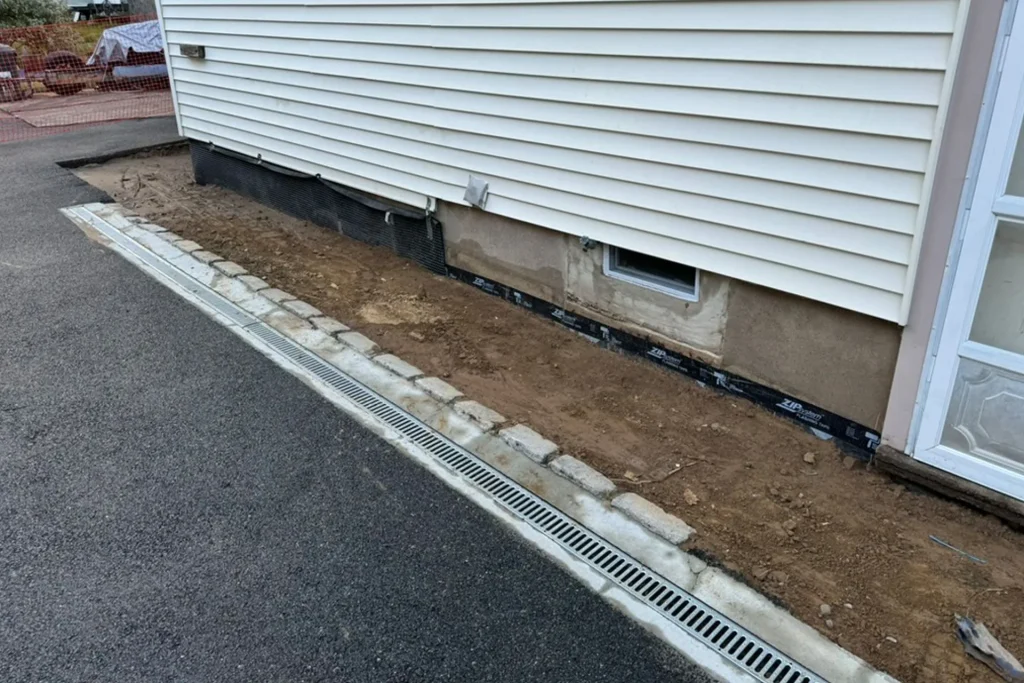
A proper exterior repair typically involves excavating down to the affected section of foundation, cleaning the wall, sealing cracks or joints, applying a waterproof membrane, and improving drainage conditions. Often that also means installing or correcting footing drains and backfilling with material that handles water better than dense native soil alone.
This is not a small undertaking. Landscaping, walkways, porches, and utility lines can complicate access. Costs rise quickly when excavation has to be done by hand or when hardscape removal is involved. Still, there are cases where it is the most durable route. If a wall is taking on water across a broad exterior face, not just through one isolated crack, exterior work often gives the best long-term result.
The trade-off is disruption. Homeowners should know that an exterior waterproofing project can affect shrubs, lawn areas, and paved surfaces. Good contractors discuss those realities before the work begins, not after the digging starts.
Interior drainage systems and sump pumps, where they fit
Not every wet basement calls for full exterior excavation. In many New Jersey homes, especially where water pressure is persistent or the basement is partly below a high water table, an interior drainage system can be the practical answer. This type of system manages water after it reaches the foundation perimeter but before it spreads across the floor.
A trench is created along the interior perimeter, drainage material and pipe are installed, and collected water is directed to a sump basin for discharge. On paper, some homeowners dislike the idea because it does not “stop” water at the outside face. In practice, it can be highly effective when installed correctly and paired with a reliable sump pump. It also avoids the site disruption of excavation.
That said, interior drainage is management, not magic. It does not correct a structurally failing wall. It does not replace exterior grading fixes. And if the discharge line freezes in winter or the sump pump loses power during a storm, performance can be compromised. Battery backup systems and routine testing matter more than people realize. I have seen otherwise good systems underperform because the pump had not been checked in years.
Signs that the problem is larger than a simple waterproofing repair
Some foundation cracks are not just moisture issues. They are structural issues with a moisture symptom attached. The distinction matters because waterproofing materials will not stop a wall from continuing to move.
Watch for these signs during an evaluation:
- Horizontal cracking, especially in block walls
- Walls that bow, lean, or bulge inward
- Cracks wider at one end than the other
- Doors or windows above the basement that have begun sticking
- Repaired cracks that reopen or extend over time
Any one of these does not automatically mean severe failure, but together they raise concern. In that situation, the repair plan may need wall anchors, carbon fiber reinforcement, steel bracing, or another stabilization method before or alongside waterproofing work. The best contractors say so plainly. They do not sell cosmetic sealing where structural intervention is needed.
How drainage outside the house affects wall cracks inside
A surprising number of wet-basement calls trace back to basic water control around the exterior. This is not glamorous work, but it often produces the biggest improvement per dollar spent.
Start with roof runoff. A typical roof sheds a large volume of water during a heavy storm, and if downspouts discharge at the base of the house, that water lands exactly where it can do the most harm. Add compacted or settled soil sloping toward the foundation, and you have a steady source of pressure against the wall.
Grading corrections, extended downspouts, swales, and drain line improvements are often part of the permanent fix. In some cases, a homeowner assumes they need a major foundation overhaul when what they really need is a better exterior water-management strategy plus one targeted crack repair. In other cases, exterior drainage improvements reduce the water load enough that an interior repair finally has a chance to last.
This is why experienced Basement Waterproofing NJ contractors spend time walking the property, not just inspecting the damp wall. The yard, roofline, hardscape, and neighboring runoff patterns all matter.
Choosing the right repair method for the wall type
Poured concrete, concrete block, brick, and stone foundations all behave differently underground. A one-size-fits-all proposal should make you cautious.
Poured concrete walls tend to crack in cleaner lines. They often respond well to injection repairs when structurally sound. Concrete block walls present more pathways for moisture because of mortar joints and hollow cores. Brick foundations can wick moisture through aged mortar and may need repointing combined with waterproofing measures. Stone foundations, common in some older homes, are even more nuanced. Their irregular surfaces and lime-based mortars often require a different approach than modern cement-based walls.
Material compatibility matters. So does the age of the home. Repairs that are too rigid or too surface-focused can trap moisture where you do not want it. In older structures especially, the goal is not simply to coat everything. It is to control bulk water, allow appropriate drying where possible, and avoid forcing moisture into adjacent materials.
What a thorough inspection should include
A credible inspection is more than a glance and a price. The person evaluating the basement should be trying to answer several questions at once: where the water is entering, why pressure is building there, whether the wall is moving, and which repair options match the foundation type and the homeowner’s goals.
A solid assessment usually includes the following:
- Measuring crack width and noting its direction and location
- Looking for displacement, bowing, or settlement clues
- Checking exterior grading, gutters, and downspout discharge
- Identifying signs of past repairs, efflorescence, and mold odor
- Discussing how often the leak occurs and under what weather conditions
Those details help separate a one-off seep from a recurring hydrostatic problem. They also help avoid overselling. Some basements need a localized repair. Some need broader system work. A good inspection distinguishes between them.
Cost, durability, and the temptation of the cheapest fix
Basement waterproofing prices vary widely because the work itself varies widely. A single crack injection in a stable poured concrete wall is a very different job from excavating one side of a house, applying an exterior membrane, and replacing drainage. Anyone quoting broad numbers without seeing the site is guessing.
Homeowners naturally compare bids, but the cheaper proposal is not always the less expensive choice over time. If one company plans to seal only the visible crack while another addresses drainage conditions causing the pressure, the prices are not really for the same outcome. I have seen low-cost repairs fail within a season because the surrounding conditions were ignored. I have also seen expensive proposals where a simpler repair plus exterior runoff improvements would have solved the issue.
Durability depends on fit. The best value comes from using the least invasive repair that fully addresses the problem, not from buying the largest package by default or the lowest bid on paper.
Basement finishing raises the stakes
An unfinished basement can hide moisture problems longer than a finished one. Once drywall, flooring, insulation, and trim go in, even small leaks become expensive. Water behind finished walls can lead to mold growth, damaged framing, ruined flooring, and air quality complaints before visible staining ever appears in the open room.
For homeowners planning to finish a basement, crack repair and waterproofing should happen first, not later. This sounds obvious, yet many projects move forward because the basement “has only had a little dampness.” That little dampness tends to become a large insurance claim or a demolition job when hidden cavities stay wet.
If a basement already is finished, inspections can be trickier. Moisture meters, baseboard staining, flooring edges, and subtle odors often provide clues. Sometimes selective opening of a finished wall is the only reliable way to see the condition at a crack location.
Red flags when hiring a contractor
The basement waterproofing industry has many capable professionals, but it also has quick-sales tactics. Homeowners benefit from a little skepticism.
Be careful when a contractor diagnoses major structural danger within minutes and pushes for immediate signature discounts. Be equally careful when someone dismisses every crack as harmless without checking exterior conditions. Both extremes are common, and neither serves the homeowner well.
Look for clarity. The contractor should explain what they believe is happening, why the recommended repair matches the wall type, and what limitations remain. If they suggest an interior drainage system, ask how the discharge will be protected from freezing and whether a battery backup is advisable. If they suggest crack injection, ask whether the crack appears active or stable. If they suggest excavation, ask what site restoration is included.
A seasoned Basement Waterproofing NJ professional usually has no trouble discussing trade-offs. Real experience shows in the gray areas, not just the sales brochure.
Preventive work that reduces future crack and moisture problems
Once a repair is complete, preventive maintenance helps protect the investment. Foundations do not live in isolation. Small exterior issues become basement issues over time.
Keep gutters clear and downspouts directed well away from the foundation. Watch for soil settlement along the house after heavy rains or landscaping work. Avoid piling mulch too high against siding or foundation walls. If a sump system is installed, test it periodically, especially before storm season. If you notice a crack changing shape, widening, or staining repeatedly, do not wait for standing water to confirm the problem.
Many basement issues would stay manageable if addressed at the first signs of seepage. The longer water is allowed to cycle through a wall, the more likely it is that materials deteriorate, odors develop, and structural questions enter the picture.
Why the best waterproofing plan is rarely just one product
People often want a single answer, a coating, an injection, a drain, a membrane. In the field, the best outcomes usually come from combining the right measures in the right places. A poured concrete wall with one isolated leak may need only a precise injection and exterior grading correction. A block foundation with seasonal seepage may need crack repair, interior drainage, sump upgrades, and runoff changes outside. A bowed wall may need reinforcement before the waterproofing side of the work is truly complete.
That layered approach is not overcomplication. It is simply how basements behave. Water follows pressure, structure responds to soil, and repairs last when they account for both. For New Jersey homeowners dealing with cracks in foundation walls, that practical understanding is what separates a short-term patch from a basement that stays dry through the next hard storm and the many after it.
ARD Waterproofing
Address: 98 Smull Ave, West Caldwell, NJ 07006
Phone number: +12016465936
FAQ About Basement Waterproofing NJ
What is the best waterproofing method for a basement?
The best overall approach to waterproofing a basement is a combined exterior and interior system that stops water at the foundation wall and safely manages any moisture that gets through.
What is the average cost to waterproof a basement?
The average cost to waterproof a basement ranges from $2,500 to $15,000, with most homeowners paying around $5,200 for a complete project.
Can a basement be waterproofed from the inside?
Yes, a basement can be waterproofed from the inside, and it is often the most affordable and least disruptive method.